

Table of Contents
- Introduction
- The Rising Cost of Petrol and LPG
- Why Solar Energy is Different
- How Solar Power Helps You Save Money
- Key Features of Solar Energy Systems
- Petrol & LPG vs Solar Energy Comparison
- Benefits of Switching to Solar Power
- Why Homeowners Are Choosing Solar Energy
- Why Businesses Should Invest in Solar Solutions
- Long-Term Financial Benefits of Solar Power
- Frequently Asked Questions (FAQs)
-
Conclusion
Introduction
Energy costs affect almost every aspect of daily life. Whether it's transportation, cooking, manufacturing, or electricity consumption, rising fuel prices have a direct impact on household and business expenses.
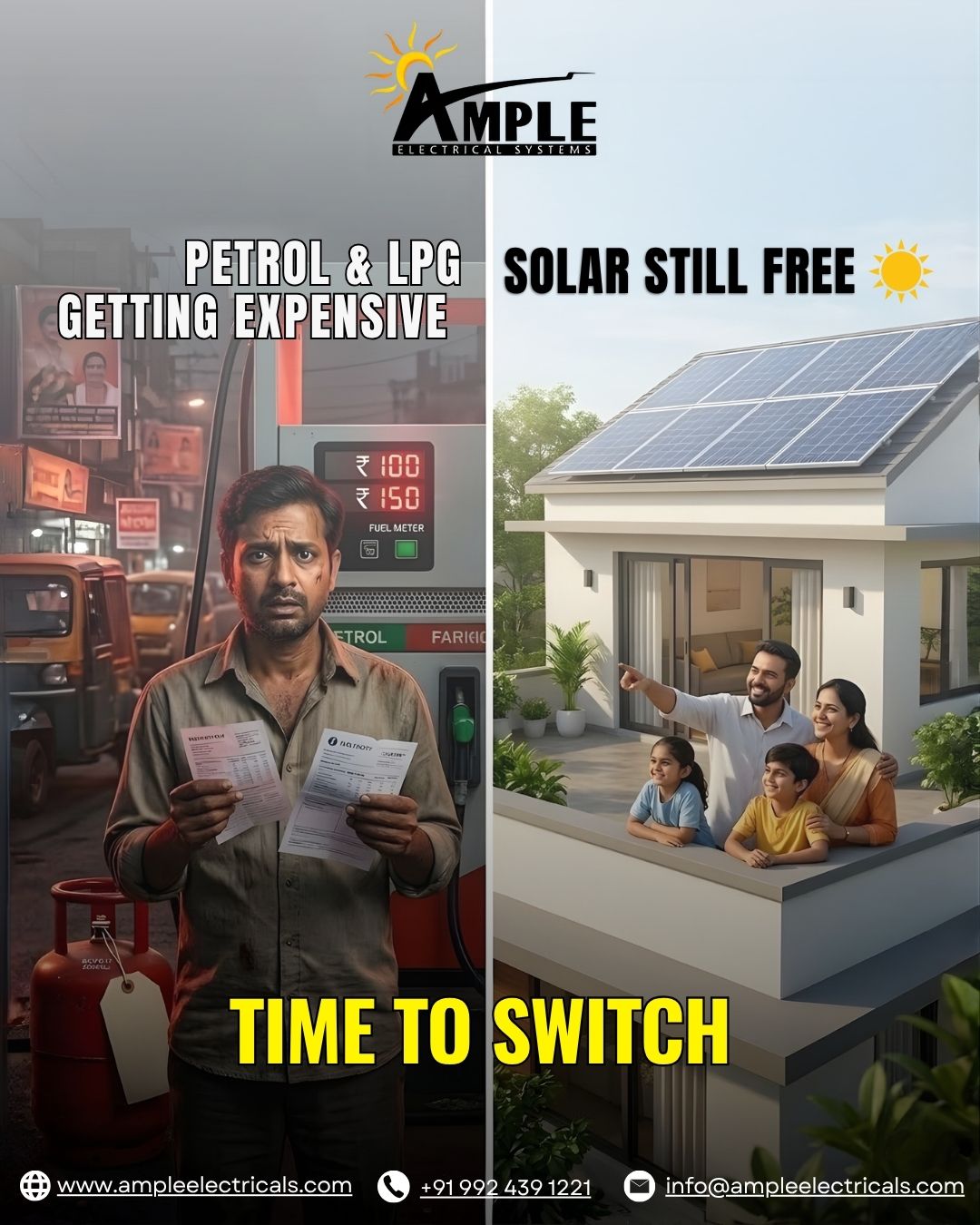
Petrol and LPG prices have steadily increased over time, making it more expensive to run vehicles, operate equipment, and manage everyday energy needs. In contrast, solar energy offers a sustainable and affordable solution by utilizing free sunlight to generate electricity.
As more people look for ways to reduce expenses and achieve energy independence, solar power has emerged as one of the smartest long-term investments.The cost of living continues to increase, and one of the biggest contributors is the rising price of fuel and energy. Petrol, LPG, and conventional energy sources have become significantly more expensive over the years, putting pressure on household and business budgets. While fuel prices continue to fluctuate and increase, solar energy remains one of the most reliable and cost-effective alternatives available todayUnlike traditional energy sources that require ongoing fuel purchases, solar power uses free energy from the sun to generate electricity. Once installed, a solar power system can provide decades of clean energy while significantly reducing monthly electricity expenses.The Rising Cost of Petrol and LPG
Traditional energy sources depend on finite fossil fuels, which are subject to market fluctuations, global demand, supply chain disruptions, and government policies.
Challenges associated with rising fuel prices include:
- Higher transportation costs
- Increased household expenses
- Rising electricity production costs
- Greater business operating expenses
- Dependence on non-renewable resources
- Environmental concerns
These factors make it increasingly important to explore alternative energy solutions.
Why Solar Energy is Different
Unlike petrol, diesel, and LPG, solar energy comes directly from sunlight, which is available every day without fuel costs.
Solar energy offers:
- Free fuel source (sunlight)
- Renewable and sustainable power
- Minimal operating costs
- Reduced dependence on utility providers
- Environmentally friendly electricity generation
Once a solar system is installed, the sun continues to provide energy at no additional fuel cost.
How Solar Power Helps You Save Money
One of the biggest advantages of solar energy is long-term cost savings.
Lower Electricity Bills
Solar panels generate electricity directly from sunlight, reducing dependence on grid power.
Protection Against Rising Energy Costs
Solar energy helps protect homeowners and businesses from future increases in electricity and fuel prices.
Long-Term Savings
A quality solar system can provide energy savings for 25 years or more.
Reduced Operational Costs
Businesses can significantly lower monthly energy expenses by adopting solar power solutions.
Return on Investment
Most solar installations recover their costs through energy savings over time.
Key Features of Solar Energy Systems
Feature Benefit Renewable Energy Source Unlimited sunlight availability Zero Fuel Cost Free energy from the sun Low Maintenance Minimal servicing required Long Lifespan 25+ years of operation Eco-Friendly Reduces carbon emissions Cost Savings Lower electricity bills Energy Independence Reduced reliance on utility companies Scalable Solutions Suitable for homes and businesses
Petrol & LPG vs Solar Energy Comparison
Parameter Petrol & LPG Solar Energy Fuel Cost Continuously Increasing Free Sunlight Availability Limited Resources Renewable Source Environmental Impact High Carbon Emissions Clean Energy Operating Cost High Low Long-Term Savings Limited Significant Maintenance Cost Moderate Low Sustainability Low High Price Stability Unpredictable Stable
Benefits of Switching to Solar Power
Reduced Monthly Expenses
Solar energy lowers electricity costs and reduces dependency on expensive traditional energy sources.
Environmentally Responsible Choice
Solar systems generate clean electricity without harmful emissions.
Energy Security
Producing your own electricity provides greater control over energy consumption.
Increased Property Value
Homes equipped with solar power systems often attract higher market value.
Government Support
Many regions offer incentives, subsidies, and benefits for renewable energy installations.
Why Homeowners Are Choosing Solar Energy
Residential solar systems have become increasingly popular due to their ability to deliver long-term financial benefits.
Advantages include:
- Lower electricity bills
- Reliable energy generation
- Reduced carbon footprint
- Increased property value
- Long-term savings
- Sustainable living
Solar rooftops allow homeowners to convert unused roof space into a valuable energy-producing asset.
Why Businesses Should Invest in Solar Solutions
Commercial energy costs can significantly impact profitability. Solar energy helps businesses reduce operating expenses while improving sustainability efforts.
Business benefits include:
- Lower energy costs
- Improved return on investment
- Enhanced corporate image
- Reduced environmental impact
- Long-term energy stability
- Competitive operational advantages
Many organizations now view solar power as both an economic and environmental investment.
Long-Term Financial Benefits of Solar Power
Solar energy should be viewed as a long-term investment rather than an expense.
Financial advantages include:
- Reduced electricity bills for decades
- Protection from energy inflation
- Increased property value
- Lower operating expenses
- Attractive return on investment
- Reduced dependence on external energy providers
As fuel prices continue to rise, the financial value of solar energy becomes even greater.
Frequently Asked Questions (FAQs)
Why is solar energy becoming more popular?
Solar energy helps reduce electricity costs, supports sustainability, and provides long-term savings.
Does solar energy have any fuel cost?
No. Solar systems use sunlight, which is completely free.
How long do solar panels last?
Most solar panels are designed to operate efficiently for 25 to 30 years or more.
Can solar energy reduce electricity bills significantly?
Yes. Depending on system size and energy usage, solar power can dramatically lower electricity expenses.
Is solar energy suitable for businesses?
Absolutely. Solar power helps businesses reduce operating costs and improve sustainability performance.
Does solar energy work during cloudy weather?
Yes, solar panels still generate electricity during cloudy conditions, although output may be reduced.
Is solar energy environmentally friendly?
Yes. Solar power generates clean electricity without producing harmful greenhouse gas emissions.
Conclusion
As petrol, LPG, and traditional energy costs continue to rise, solar energy remains one of the most reliable and cost-effective alternatives available. By harnessing free sunlight, solar power systems provide clean electricity, lower energy bills, and long-term financial savings.
Whether you are a homeowner looking to reduce monthly expenses or a business aiming to improve efficiency and sustainability, switching to solar energy is a smart investment for the future.
The sun continues to provide free energy every day. With rising fuel costs and increasing energy demands, now is the perfect time to make the switch to solar power.