

Table of Contents
| Sr. No. | Topics |
|---|---|
| 1 | Introduction to Solar Energy |
| 2 | What Does SOLAR Stand For? |
| 3 | Saves Money |
| 4 | Oxygen Rich Air |
| 5 | Low Carbon Emission |
| 6 | Affordable Energy |
| 7 | Restoring Nature |
| 8 | Why Solar Energy Is the Future |
| 9 | Benefits of Solar Energy for Homes and Businesses |
| 10 | Environmental Impact of Solar Power |
| 11 | Applications of Solar Energy |
| 12 | Frequently Asked Questions |
| 13 | Conclusion |
What Does SOLAR Stand For?
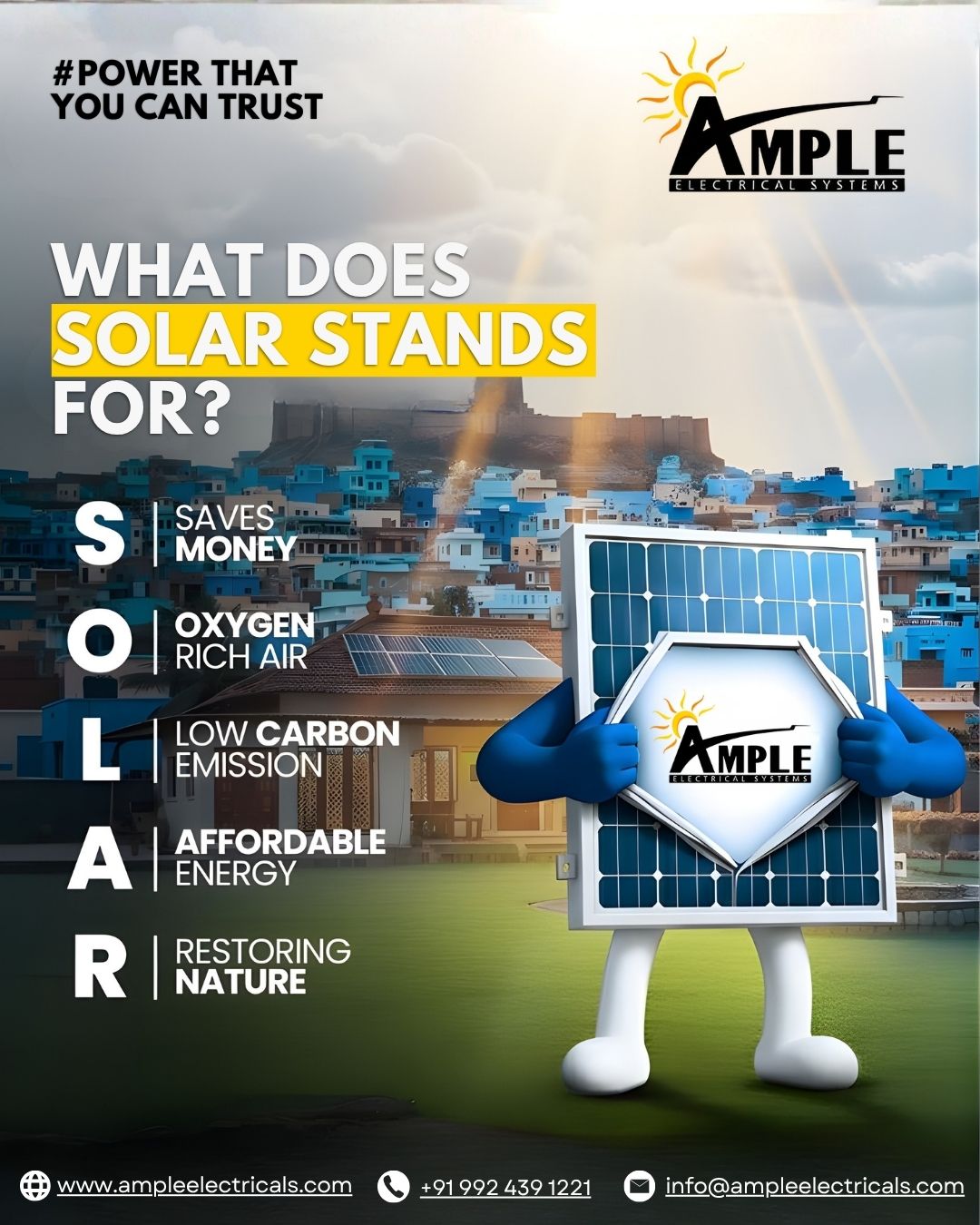
Solar energy offers numerous advantages that go beyond electricity generation. The acronym SOLAR perfectly summarizes the positive impact of renewable energy on both individuals and the environment.
Solar energy is more than just a renewable source of electricity—it represents a smarter, cleaner, and more sustainable way of powering our lives. As the demand for affordable and environmentally friendly energy solutions continues to rise, solar power has emerged as one of the most effective alternatives to conventional electricity generation.
The word SOLAR can symbolize the key advantages that make solar energy a preferred choice for homeowners, businesses, and industries:
S – Saves Money
O – Oxygen Rich Air
L – Low Carbon Emission
A – Affordable Energy
R – Restoring Nature
These benefits highlight how solar power not only reduces electricity costs but also contributes to a healthier environment and a more sustainable future. Whether you're considering solar for your home or business, understanding these core advantages can help you make an informed investment in renewable energy.
S – Saves Money
One of the biggest reasons people switch to solar energy is the significant reduction in electricity bills.
Solar panels generate electricity directly from sunlight, reducing dependence on utility providers. Over time, the savings from lower electricity bills can exceed the initial installation cost, making solar a financially rewarding investment.
Key Financial Benefits
- Lower monthly electricity bills
- Protection from rising utility costs
- Long-term savings for 25+ years
- Improved return on investment
- Increased property value
Oxygen Rich Air
Traditional electricity generation often relies on fossil fuels, which release harmful pollutants into the atmosphere.
Solar energy produces clean electricity without emitting smoke, sulfur dioxide, or other harmful pollutants. By reducing dependence on fossil fuels, solar power helps improve air quality and contributes to a healthier environment.
Benefits of Cleaner Air
- Reduced air pollution
- Improved public health
- Lower greenhouse gas emissions
- Better quality of life
- Support for sustainable communities
Low Carbon Emission
Climate change remains one of the greatest challenges facing the world today. Carbon emissions from conventional power plants are a major contributor to global warming.
Solar energy generates electricity without producing carbon dioxide emissions during operation. As more homes and businesses adopt solar power, the overall carbon footprint of communities decreases significantly.
Environmental Advantages
- Reduced greenhouse gas emissions
- Lower dependence on fossil fuels
- Cleaner energy production
- Support for climate change mitigation
- Sustainable energy generation
Affordable Energy
Advancements in solar technology have made solar power more affordable than ever before.
With decreasing installation costs, government incentives, and flexible financing options, solar energy has become accessible to homeowners, businesses, industries, and agricultural sectors.
Why Solar Is Affordable
- Falling solar panel costs
- Reduced electricity expenses
- Low maintenance requirements
- Long system lifespan
- Strong return on investment
Restoring Nature
Solar energy plays an important role in protecting natural ecosystems and preserving environmental resources.
By replacing fossil fuel-based electricity generation, solar power helps reduce pollution, conserve natural resources, and support ecological balance.
How Solar Helps Nature
- Reduces environmental degradation
- Conserves finite natural resources
- Supports biodiversity preservation
- Encourages sustainable development
- Promotes a greener future
Introduction to Solar Energy
Solar energy is generated by capturing sunlight and converting it into usable electricity through photovoltaic (PV) technology. As one of the fastest-growing renewable energy sources globally, solar power is helping countries reduce dependence on traditional energy sources while meeting growing electricity demands.
The ability to generate clean energy from an abundant natural resource makes solar one of the most sustainable solutions available today.
Why Solar Energy Is the Future
The future of energy lies in renewable and sustainable solutions. Solar energy offers a practical path toward energy independence and environmental responsibility.
Unlimited Energy Source
The sun provides an endless supply of energy every day.
Energy Security
Solar systems reduce dependence on external power suppliers.
Technological Advancement
Modern solar technologies continue to improve efficiency and affordability.
Sustainable Growth
Solar energy supports long-term economic and environmental sustainability.
Benefits of Solar Energy for Homes and Businesses
Solar power delivers value across residential, commercial, and industrial sectors.
Lower Operating Costs
Generate electricity and reduce monthly utility expenses.
Reliable Energy Generation
Produce power consistently throughout the year.
Increased Property Value
Solar-equipped properties often command higher market prices.
Long-Term Investment
Most solar systems continue generating electricity efficiently for decades.
Environmental Impact of Solar Power
Solar energy is one of the cleanest forms of electricity generation available.
Reduced Air Pollution
Solar power helps improve air quality by reducing emissions.
Lower Carbon Footprint
Users can significantly reduce their environmental impact.
Conservation of Resources
Solar energy decreases reliance on limited fossil fuel reserves.
Climate Change Mitigation
Renewable energy adoption supports global sustainability efforts.
Applications of Solar Energy
Solar power is used in various sectors and industries.
| Application Area | Benefits |
|---|---|
| Residential Homes | Reduced Electricity Bills |
| Commercial Buildings | Lower Operating Costs |
| Industries | Energy Efficiency |
| Agriculture | Solar-Powered Irrigation |
| Educational Institutions | Sustainable Energy Supply |
| Rural Communities | Reliable Off-Grid Power |
Frequently Asked Questions (FAQs)
What does SOLAR stand for?
SOLAR represents Saves Money, Oxygen Rich Air, Low Carbon Emission, Affordable Energy, and Restoring Nature.
Why is solar energy considered environmentally friendly?
Solar energy generates electricity without harmful emissions, reducing pollution and environmental impact.
Can solar energy reduce electricity bills?
Yes, solar panels generate electricity from sunlight, helping users reduce utility costs significantly.
How long do solar panels last?
Most solar panels have an average lifespan of 25 to 30 years or more.
Is solar energy affordable?
Yes, advancements in technology and government incentives have made solar energy more affordable than ever.
Does solar power help reduce carbon emissions?
Yes, solar energy generates electricity without producing carbon dioxide emissions during operation.
Can businesses benefit from solar energy?
Absolutely. Businesses can reduce operating costs and achieve sustainability goals through solar power adoption.
What maintenance do solar systems require?
Solar systems require minimal maintenance, mainly periodic cleaning and inspections.
Is solar energy suitable for rural areas?
Yes, solar power is an excellent solution for remote and off-grid locations.
Why should I invest in solar energy?
Solar energy provides long-term savings, energy independence, environmental benefits, and a strong return on investment.
Conclusion
Solar energy is more than just a source of electricity—it represents a commitment to sustainability, affordability, and environmental responsibility. The acronym SOLAR perfectly captures the core benefits that make renewable energy such a powerful solution for modern energy needs.
By helping users save money, improve air quality, reduce carbon emissions, access affordable energy, and restore nature, solar power is driving the transition toward a cleaner and more sustainable future. Whether for homes, businesses, or industries, investing in solar energy is an investment in both financial security and environmental well-being.