

Table of Contents
- Introduction
- What Does "Sunlight In, Energy Out" Mean?
- How Solar Energy Works
- Components of a Residential Solar System
- Key Features of Solar Power Systems
- Benefits of Solar Energy for Homeowners
- Solar Energy Working Process Table
- Solar Power vs Traditional Electricity
- Financial Benefits of Solar Installation
- Environmental Advantages of Solar Energy
- Frequently Asked Questions (FAQs)
- Conclusion
Introduction
Modern homeowners are looking for smarter and more sustainable ways to power their homes. Traditional electricity costs continue to increase, making renewable energy solutions more attractive than ever before.
Solar energy provides a simple solution by converting sunlight into electricity. Every ray of sunlight that falls on a solar panel has the potential to generate clean, renewable energy. This energy can be used immediately, stored for later use, or even supplied back to the grid depending on the system configuration.
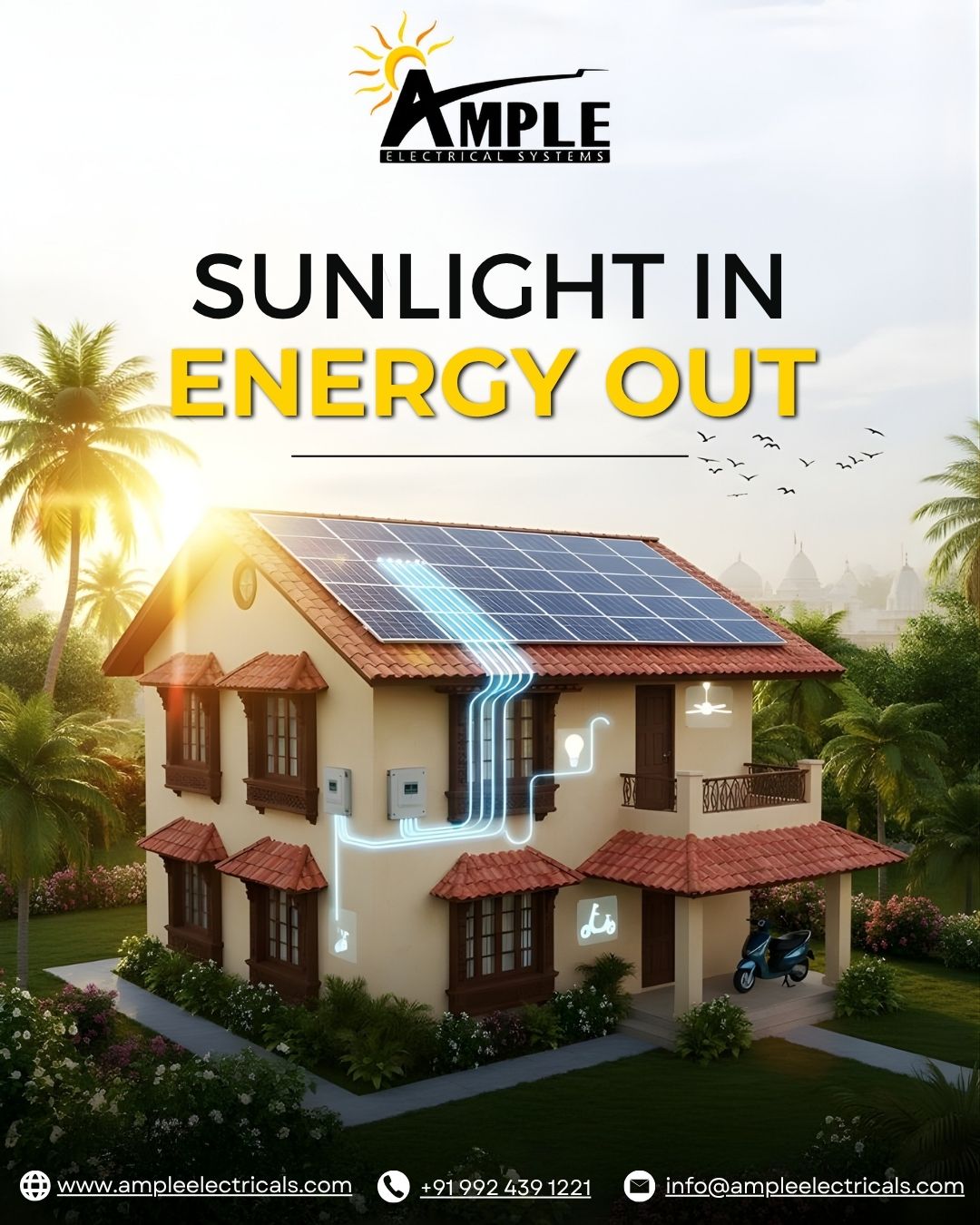
The idea behind "Sunlight In, Energy Out" perfectly represents how solar technology transforms natural sunlight into reliable electricity for everyday living.
What Does "Sunlight In, Energy Out" Mean?
The phrase describes the fundamental process of solar energy generation.
Sunlight In
Solar panels absorb sunlight through photovoltaic (PV) cells installed on rooftops or other suitable locations.
Energy Out
The absorbed sunlight is converted into electricity that powers household appliances, lighting systems, electronic devices, and other electrical equipment.
This simple process enables homes to generate their own clean energy directly from the sun.
How Solar Energy Works
Solar power generation involves several important steps.
Sunlight Reaches Solar Panels
Solar panels capture sunlight throughout the day.
Photovoltaic Cells Generate Electricity
The solar cells convert solar radiation into Direct Current (DC) electricity.
Inverter Converts Electricity
The inverter changes DC power into Alternating Current (AC), which is used by most household appliances.
Electricity Powers the Home
The generated electricity flows through the home's electrical system and powers everyday devices.
Excess Energy Management
Additional energy can be stored in batteries or exported to the utility grid through net metering.
Components of a Residential Solar System
| Component | Function |
|---|---|
| Solar Panels | Capture sunlight and generate electricity |
| Solar Inverter | Converts DC electricity into AC electricity |
| Mounting Structure | Supports solar panel installation |
| Solar Battery | Stores excess energy for later use |
| Monitoring System | Tracks system performance |
| Electrical Wiring | Safely distributes electricity |
Key Features of Solar Power Systems
| Feature | Benefit |
|---|---|
| Renewable Energy Source | Unlimited sunlight availability |
| Low Operating Cost | Minimal ongoing expenses |
| Long Lifespan | 25+ years of efficient performance |
| Environmentally Friendly | Produces clean electricity |
| Energy Independence | Reduces reliance on utility companies |
| Silent Operation | No noise during power generation |
| Low Maintenance | Requires minimal servicing |
| Scalable Design | Suitable for homes of all sizes |
Benefits of Solar Energy for Homeowners
Lower Electricity Bills
Solar systems generate electricity directly from sunlight, reducing monthly utility costs.
Increased Property Value
Homes with solar installations often attract higher market value.
Reliable Energy Source
Solar panels provide dependable electricity generation for decades.
Energy Independence
Homeowners gain greater control over their electricity consumption.
Long-Term Savings
Reduced utility bills lead to significant savings over the lifespan of the system.
Sustainable Living
Solar energy helps households reduce their carbon footprint and environmental impact.
Solar Energy Working Process Table
| Step | Process | Result |
|---|---|---|
| 1 | Sunlight Hits Panels | Energy Absorption |
| 2 | Solar Cells Activate | DC Electricity Generated |
| 3 | Inverter Converts Power | AC Electricity Produced |
| 4 | Home Uses Electricity | Appliances Operate |
| 5 | Excess Energy Stored or Exported | Additional Savings |
Solar Power vs Traditional Electricity
| Parameter | Traditional Electricity | Solar Energy |
|---|---|---|
| Energy Source | Fossil Fuels | Sunlight |
| Monthly Cost | Continuous Payments | Reduced Costs |
| Environmental Impact | High Emissions | Clean Energy |
| Fuel Requirement | Required | Free Sunlight |
| Sustainability | Limited | Renewable |
| Long-Term Savings | Moderate | Significant |
| Price Stability | Variable | Stable |
Financial Benefits of Solar Installation
Investing in solar energy offers several financial advantages.
Reduced Utility Bills
Generate your own electricity and lower dependence on grid power.
Protection from Rising Energy Costs
Solar energy helps shield homeowners from increasing electricity prices.
Return on Investment
Energy savings can offset installation costs over time.
Government Incentives
Many regions offer rebates, tax benefits, or incentives for solar adoption.
Increased Home Value
Solar-equipped homes are often more attractive to buyers.
Environmental Advantages of Solar Energy
Reduced Carbon Emissions
Solar power generates electricity without producing greenhouse gases.
Cleaner Air
Solar energy reduces dependence on fossil fuel-based power generation.
Conservation of Natural Resources
Renewable energy helps preserve limited natural resources.
Sustainable Future
Solar technology supports global efforts toward clean energy and environmental protection.
Frequently Asked Questions (FAQs)
How do solar panels convert sunlight into electricity?
Solar panels use photovoltaic cells that convert sunlight into electrical energy.
Can solar panels work during cloudy weather?
Yes, solar panels continue generating electricity even during cloudy conditions, though output may be reduced.
How long do solar panels last?
Most solar panels operate efficiently for 25 to 30 years or more.
Do solar systems require regular maintenance?
Solar systems require minimal maintenance, mainly periodic cleaning and inspections.
Can solar energy reduce electricity bills significantly?
Yes, solar power can substantially lower monthly energy costs depending on system size and usage.
Is solar energy environmentally friendly?
Absolutely. Solar energy produces clean electricity without harmful emissions.
Is solar power suitable for all homes?
Most homes with sufficient roof space and sunlight exposure can benefit from solar installations.
Conclusion
The concept of "Sunlight In, Energy Out" perfectly captures the power and simplicity of solar energy. By converting sunlight into usable electricity, solar systems help homeowners reduce energy costs, increase energy independence, and contribute to a cleaner environment.
As energy demands continue to grow and sustainability becomes increasingly important, solar power stands out as one of the most effective solutions for modern homes. Investing in solar energy today means enjoying long-term savings, reliable electricity, and a brighter future powered by renewable energy.