
Solar energy is transforming the way homes, businesses, and industries generate electricity. With rising energy costs and increasing environmental concerns, investing in a smart solar system has become one of the most practical and profitable decisions. Smart solar solutions provide abundant clean energy, require minimal maintenance, reduce electricity expenses, and contribute to a greener future.
Modern solar systems are designed to deliver high returns on investment while ensuring long-term reliability. Whether for urban households, commercial buildings, agricultural operations, or rural communities, solar power offers a sustainable and cost-effective energy solution.
By harnessing the power of the sun, users can enjoy energy independence, lower utility bills, and environmental benefits for decades. Smart solar technology is not just an energy source—it is a smart investment for the future.
Table of Contents
- Introduction to Smart Solar Energy
- Why Smart Solar Is a Smart Investment
- Key Benefits of Smart Solar Systems
- High Returns on Investment
- Low Maintenance Requirements
- Abundant Energy Generation
- Reducing Carbon Footprint
- Solar Power for Rural Areas
- Environmental Benefits of Smart Solar
- Applications of Smart Solar Solutions
- Why Businesses Are Choosing Solar
- Frequently Asked Questions
- Conclusion
Introduction to Smart Solar Energy
Solar energy has become one of the most rapidly growing renewable energy sources worldwide. With advancements in photovoltaic technology, smart solar systems can efficiently convert sunlight into electricity while maximizing performance and energy savings.
Unlike conventional power sources that rely on fossil fuels, solar energy is clean, renewable, and sustainable. As installation costs continue to decrease and technology improves, solar power is becoming increasingly accessible to homeowners, businesses, industries, and agricultural sectors.
Smart solar systems not only generate electricity but also offer long-term economic and environmental benefits, making them an ideal choice for modern energy needs.
Why Smart Solar Is a Smart Investment
Investing in solar energy is more than just reducing electricity bills. It is a long-term investment that provides financial stability, energy security, and environmental benefits.
One of the biggest reasons people choose solar energy is its ability to generate substantial savings over time. As utility rates continue to increase, solar power allows users to produce their own electricity and reduce dependence on traditional energy providers.
Additionally, solar installations can increase property value, making homes and commercial buildings more attractive to potential buyers. The combination of reduced operating costs and long-term savings makes solar one of the smartest investments available today.
Key Benefits of Smart Solar Systems
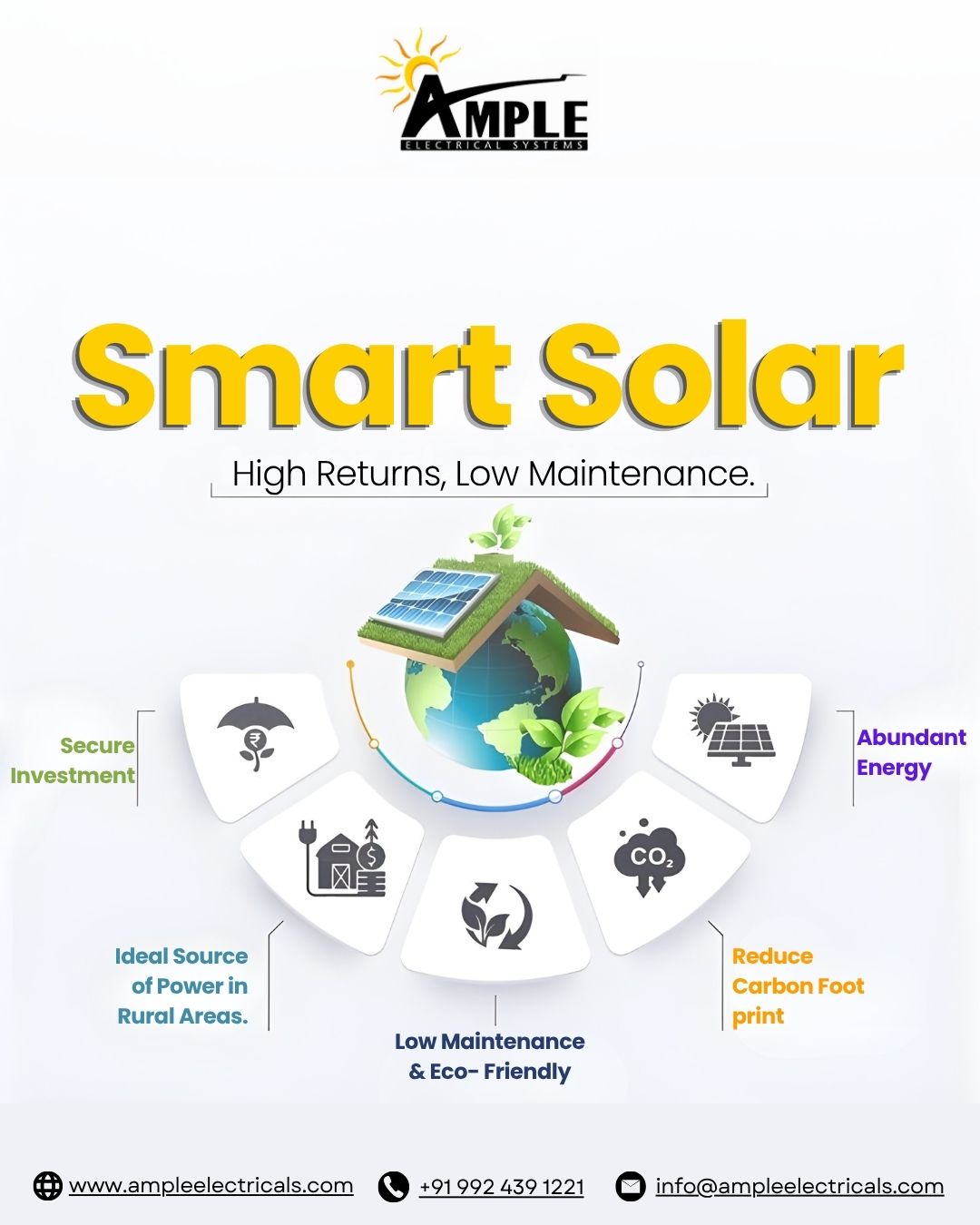
Smart solar systems offer a wide range of benefits that make them an attractive energy solution for residential, commercial, and industrial applications.
Secure Investment
Solar systems provide reliable returns through consistent energy savings and reduced electricity costs.
Abundant Energy
The sun is an unlimited energy source, ensuring a continuous supply of clean electricity.
Low Maintenance
Modern solar panels require very little maintenance and can operate efficiently for decades.
Eco-Friendly Solution
Solar energy generates electricity without releasing harmful greenhouse gases or pollutants.
Ideal for Rural Areas
Solar systems can provide reliable electricity to remote locations where traditional grid infrastructure may be unavailable.
High Returns on Investment
One of the most attractive aspects of solar energy is its ability to deliver excellent returns over the long term.
Reduced Electricity Bills
Solar systems generate electricity from sunlight, reducing dependence on utility companies and lowering monthly energy expenses.
Faster Payback Period
Many solar installations recover their initial investment within a few years through energy savings.
Long-Term Savings
After the payback period, solar systems continue generating electricity with minimal operational costs, providing decades of financial benefits.
Government Incentives
Many governments offer subsidies, tax benefits, and incentive programs that further improve the financial return on solar investments.
Low Maintenance Requirements
Solar systems are designed to operate efficiently with minimal maintenance.
Minimal Cleaning Needs
Occasional cleaning helps remove dust and debris, ensuring optimal energy production.
No Moving Parts
Since solar panels have no moving components, there is very little wear and tear.
Long Lifespan
Most high-quality solar panels have an operational lifespan of 25 to 30 years or more.
Low Operating Costs
Routine inspections and periodic cleaning are generally the only maintenance requirements, keeping costs low.
Abundant Energy Generation
The sun provides more energy than humanity could ever consume, making solar power one of the most sustainable energy solutions available.
Unlimited Energy Source
Unlike fossil fuels, solar energy is renewable and continuously replenished by sunlight.
Reliable Power Production
Solar systems generate electricity daily and can be combined with battery storage for enhanced reliability.
Suitable for Multiple Applications
From homes and businesses to farms and industries, solar power can be adapted to various energy requirements.
Reducing Carbon Footprint
Solar energy plays a significant role in reducing environmental impact and combating climate change.
Lower Carbon Emissions
Generating electricity from solar power eliminates the need for fossil fuels and reduces greenhouse gas emissions.
Cleaner Environment
Solar adoption helps improve air quality and reduces environmental pollution.
Sustainable Future
By transitioning to renewable energy, individuals and organizations contribute to a cleaner and more sustainable future.
Solar Power for Rural Areas
Solar energy is particularly valuable for rural and remote communities where access to reliable electricity may be limited.
Independent Energy Generation
Solar systems can operate independently of traditional power grids.
Agricultural Applications
Farmers can use solar energy to power irrigation systems, water pumps, and agricultural equipment.
Improved Living Standards
Reliable electricity supports education, healthcare, communication, and economic growth.
Cost-Effective Solution
Solar systems reduce dependence on expensive fuel-powered generators and grid expansion projects.
Environmental Benefits of Smart Solar
The environmental advantages of solar energy make it one of the most sustainable energy technologies available today.
Renewable Energy Source
Solar energy is naturally replenished and will remain available for billions of years.
Reduced Air Pollution
Solar electricity generation produces no harmful emissions or pollutants.
Conservation of Natural Resources
Using solar power reduces dependence on finite fossil fuel resources.
Climate Change Mitigation
Widespread solar adoption contributes significantly to global efforts to reduce carbon emissions and combat climate change.
Applications of Smart Solar Solutions
Smart solar technology is widely used across various sectors due to its flexibility and efficiency.
| Application Area | Benefits |
|---|---|
| Residential Homes | Lower Electricity Bills |
| Commercial Buildings | Reduced Operating Costs |
| Industries | Improved Energy Efficiency |
| Agricultural Farms | Solar-Powered Irrigation |
| Rural Communities | Reliable Off-Grid Electricity |
| Educational Institutions | Sustainable Energy Supply |
Why Businesses Are Choosing Solar
Businesses are increasingly investing in solar energy to reduce operating costs and improve sustainability.
Lower Operational Costs
Solar power significantly reduces electricity expenses and improves profitability.
Sustainability Goals
Organizations can demonstrate environmental responsibility through renewable energy adoption.
Energy Reliability
Solar systems provide stable and predictable energy generation.
Competitive Advantage
Businesses that embrace green energy often gain a positive brand image and customer trust.
Frequently Asked Questions (FAQs)
What is smart solar energy?
Smart solar refers to advanced solar systems designed to maximize energy production, efficiency, and savings while requiring minimal maintenance.
Is solar energy a good investment?
Yes, solar energy offers long-term savings, reduced electricity bills, and excellent returns on investment.
How long do solar panels last?
Most solar panels have a lifespan of 25 to 30 years or more.
Does solar energy work on cloudy days?
Yes, solar panels continue generating electricity during cloudy weather, although production may be reduced.
Why is solar energy environmentally friendly?
Solar power generates clean electricity without producing harmful emissions or pollutants.
Can solar power be used in rural areas?
Yes, solar energy is one of the most effective solutions for providing electricity to remote and rural locations.
How much maintenance do solar panels require?
Solar systems require very little maintenance, usually limited to cleaning and occasional inspections.
Can solar panels reduce electricity bills?
Yes, solar panels significantly reduce electricity costs by generating power from sunlight.
Is solar energy suitable for businesses?
Absolutely. Businesses benefit from lower operating costs, increased sustainability, and long-term energy savings.
What are the main benefits of smart solar systems?
The major benefits include high returns on investment, low maintenance, abundant energy generation, reduced carbon footprint, and energy independence.
Conclusion
Smart solar technology offers the perfect combination of financial savings, environmental sustainability, and long-term reliability. With benefits such as high returns on investment, low maintenance requirements, abundant energy generation, and reduced carbon emissions, solar power has become one of the most effective solutions for modern energy needs.
Whether for homes, businesses, industries, or rural communities, investing in a smart solar system can provide decades of clean, affordable, and dependable electricity. As the world continues its transition toward renewable energy, smart solar remains a powerful step toward a greener and more sustainable future.