

Table of Contents
| Sr. No. | Topics |
|---|---|
| 1 | Introduction |
| 2 | Why More Homeowners Are Choosing Solar |
| 3 | Problems with Traditional Power Supply |
| 4 | Benefits of Residential Solar Energy |
| 5 | Uninterrupted Power Supply |
| 6 | Lower Electricity Bills |
| 7 | Energy Independence |
| 8 | Environmental Benefits |
| 9 | Solar vs Traditional Electricity |
| 10 | Why Solar Is a Smart Long-Term Investment |
| 11 | Factors to Consider Before Installing Solar |
| 12 | Frequently Asked Questions |
| 13 | Conclusion |
Introduction
Electricity powers nearly every aspect of modern life. Whether it's lighting, cooling, cooking, entertainment, or remote work, households depend heavily on a stable electricity supply. However, traditional power grids often experience outages, maintenance issues, and increasing electricity tariffs.
Solar energy offers a practical solution by allowing homeowners to generate clean and renewable electricity directly from sunlight. With advancements in solar technology, residential solar systems have become more efficient, affordable, and accessible than ever before.
Why More Homeowners Are Choosing Solar
The demand for residential solar systems has grown significantly over the last decade. Rising electricity costs, environmental awareness, and government incentives have encouraged homeowners to switch to solar power.
Rising Electricity Prices
Utility costs continue to increase each year, making solar energy an attractive alternative for long-term savings.
Reliable Energy Generation
Solar systems produce electricity daily and reduce dependence on grid power.
Technological Advancements
Modern solar panels are more efficient, durable, and affordable than previous generations.
Increased Property Value
Homes with solar installations often attract higher resale values.
Problems with Traditional Power Supply
Many households still rely entirely on conventional electricity providers.
Frequent Power Outages
Unexpected power cuts can disrupt daily activities and affect productivity.
Voltage Fluctuations
Unstable electricity can damage appliances and electronic devices.
Rising Energy Costs
Monthly electricity bills continue to increase due to growing energy demand.
Dependence on External Providers
Consumers remain vulnerable to grid failures and utility rate changes.
Benefits of Residential Solar Energy
Solar energy provides homeowners with greater control over their energy consumption and expenses.
Consistent Energy Production
Solar panels generate electricity whenever sunlight is available.
Lower Utility Expenses
Self-generated electricity reduces reliance on expensive grid power.
Clean and Renewable Energy
Solar power generates electricity without harmful emissions.
Long-Term Reliability
Most solar systems continue performing efficiently for 25 years or more.
Uninterrupted Power Supply
One of the biggest advantages of solar energy is improved energy reliability.
Reduced Grid Dependence
Solar systems decrease reliance on utility providers.
Backup Energy Options
Solar systems can be paired with battery storage for continuous power during outages.
Greater Energy Security
Homeowners gain more control over their electricity supply.
Enhanced Comfort
Reliable electricity ensures uninterrupted operation of essential appliances and devices.
Lower Electricity Bills
Solar energy helps homeowners significantly reduce monthly energy expenses.
Free Energy from the Sun
Sunlight is available at no cost and can be converted into electricity.
Reduced Utility Consumption
Solar systems offset a large portion of household electricity demand.
Long-Term Savings
Over time, energy savings can exceed the initial installation cost.
Protection from Future Price Increases
Solar users are less affected by rising electricity tariffs.
Energy Independence
Generating electricity on-site provides greater energy freedom.
Less Dependence on the Grid
Homeowners become less vulnerable to power shortages and outages.
Predictable Energy Costs
Solar systems help stabilize long-term electricity expenses.
Greater Control
Users can monitor and manage their energy production and consumption.
Sustainable Living
Solar power supports self-sufficient and environmentally responsible lifestyles.
Environmental Benefits
Solar energy contributes to a cleaner and healthier environment.
Reduced Carbon Emissions
Solar electricity generation produces no greenhouse gases.
Improved Air Quality
Replacing fossil fuel-based electricity reduces air pollution.
Renewable Energy Source
Solar energy is naturally replenished every day.
Sustainable Future
Widespread solar adoption supports global sustainability goals.
Solar vs Traditional Electricity
| Feature | Solar Energy | Traditional Electricity |
|---|---|---|
| Energy Source | Renewable | Fossil Fuel Based |
| Monthly Bills | Lower | Higher |
| Environmental Impact | Low | High |
| Maintenance | Minimal | Utility Dependent |
| Energy Independence | High | Low |
| Long-Term Savings | Excellent | Limited |
Why Solar Is a Smart Long-Term Investment
Installing a solar energy system provides benefits that extend far beyond monthly bill savings.
Strong Return on Investment
Energy savings accumulate year after year.
Long Equipment Lifespan
Quality solar panels can last 25–30 years or more.
Increased Property Value
Solar-equipped homes are often more attractive to buyers.
Future-Proof Energy Solution
Solar energy supports long-term sustainability and energy security.
Factors to Consider Before Installing Solar
Available Roof Space
Ensure sufficient area for solar panel installation.
Sunlight Exposure
Maximum sunlight improves energy production.
Energy Consumption
System size should match household electricity needs.
Budget and Financing
Evaluate available incentives and financing options.
Installer Experience
Choose a trusted solar provider for quality installation and support.
Frequently Asked Questions (FAQs)
Why should I switch to solar energy?
Solar energy reduces electricity bills, provides energy independence, and supports environmental sustainability.
Can solar panels work during power outages?
Yes, when paired with battery storage systems, solar panels can provide backup power during outages.
How much can I save with solar energy?
Savings vary depending on system size and electricity consumption, but many homeowners experience significant long-term reductions in utility bills.
How long do solar panels last?
Most solar panels have a lifespan of 25 to 30 years or more.
Does solar energy work on cloudy days?
Yes, solar panels continue generating electricity during cloudy weather, although output may be lower.
Is solar energy environmentally friendly?
Yes, solar power generates clean electricity without harmful emissions.
Does installing solar increase property value?
In many cases, homes with solar systems have higher resale values.
How much maintenance do solar panels require?
Solar panels require minimal maintenance, mainly periodic cleaning and inspections.
Is solar energy a good investment?
Yes, solar energy offers long-term financial savings and environmental benefits.
What is the biggest advantage of residential solar power?
The biggest advantage is the combination of lower electricity costs, energy independence, and reliable power generation.
Conclusion
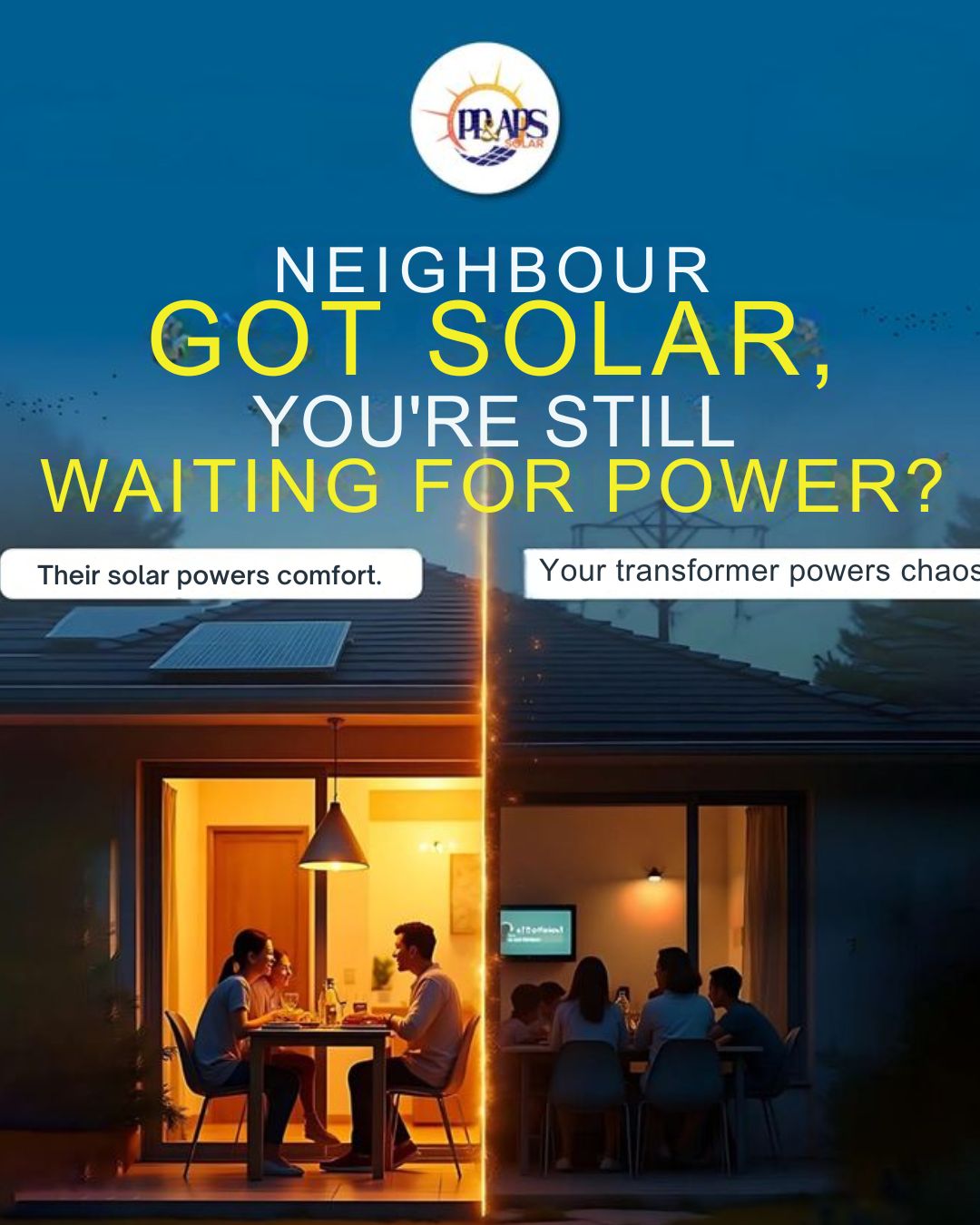
The difference between waiting for power and generating your own electricity can significantly impact your comfort, finances, and lifestyle. While traditional electricity users continue to face rising energy costs and occasional outages, solar-powered homes enjoy greater energy security, lower utility bills, and long-term savings.
Solar energy is more than just an alternative power source—it is a smart investment in energy independence and sustainability. If your neighbor is already benefiting from solar power, now may be the perfect time to make the switch and join the renewable energy revolution.