
Introduction
In today's competitive industrial landscape, managing operational costs is one of the biggest challenges for businesses. Electricity expenses often represent a significant portion of manufacturing and operational budgets. As energy prices continue to rise, industries are increasingly turning toward renewable energy solutions to reduce costs and improve sustainability.
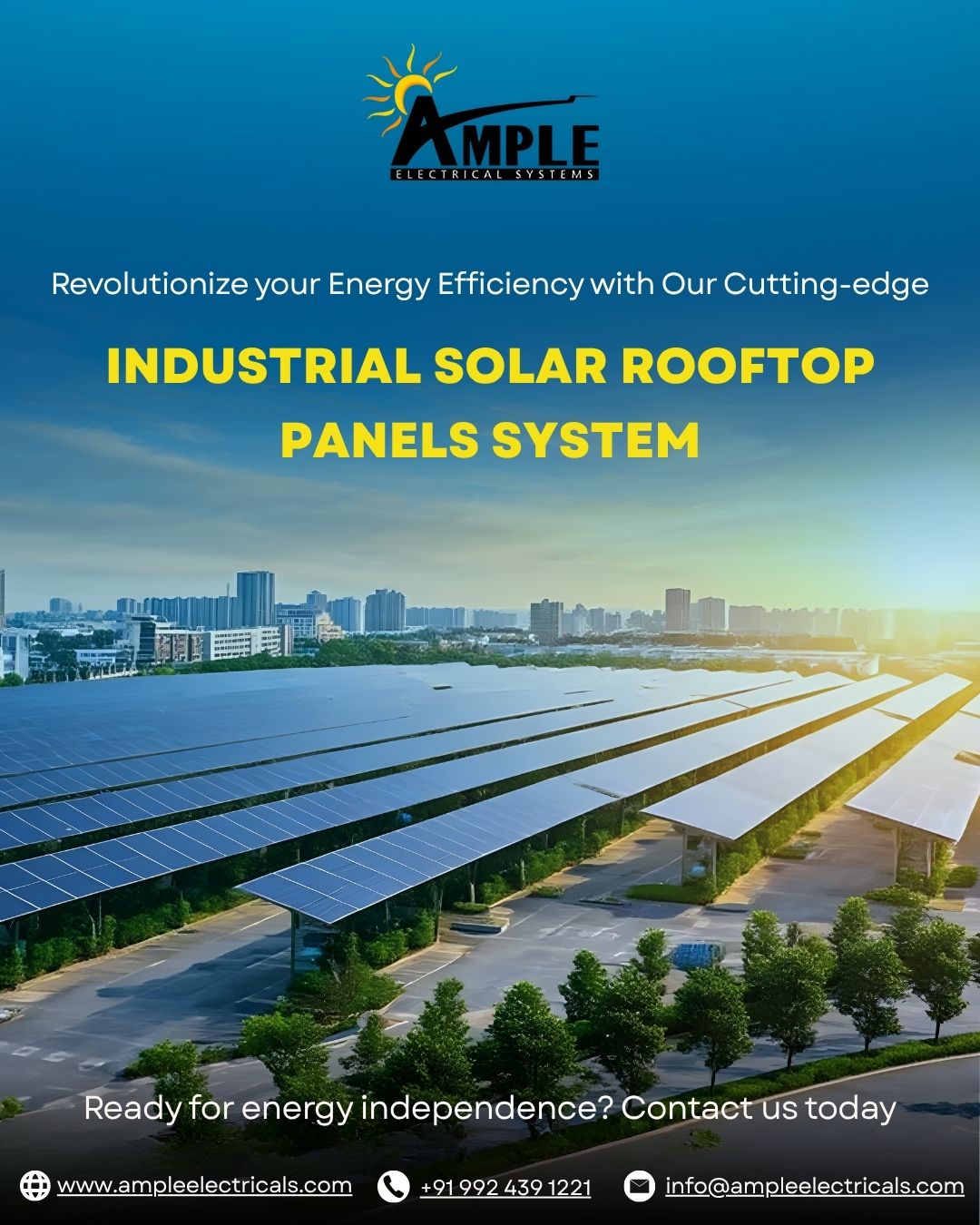
Industrial Solar Rooftop Panel Systems provide an effective way for factories, warehouses, manufacturing facilities, commercial complexes, and industrial units to generate their own electricity using sunlight. By utilizing unused rooftop space, businesses can significantly reduce their dependence on conventional power sources while lowering operational expenses.
Solar energy not only offers long-term financial benefits but also helps industries achieve sustainability goals, reduce carbon emissions, and enhance their corporate image. Investing in industrial rooftop solar systems is becoming one of the smartest business decisions for organizations seeking energy efficiency and long-term profitability.
Table of Contents
- What is an Industrial Solar Rooftop Panel System?
- Why Industries Are Switching to Solar Energy
- Key Features of Industrial Solar Rooftop Systems
- Benefits of Industrial Solar Panels
- Applications of Industrial Solar Energy
- Types of Industrial Solar Systems
- Solar Installation Process
- Cost Savings and Return on Investment
- Government Subsidies and Incentives
- Maintenance Requirements
- Frequently Asked Questions
- Conclusion
What is an Industrial Solar Rooftop Panel System?
Understanding Industrial Solar Power
An Industrial Solar Rooftop Panel System is a large-scale solar energy solution installed on factory roofs, warehouses, commercial buildings, and industrial facilities. These systems convert sunlight into electricity through photovoltaic (PV) panels and help industries generate clean power for daily operations.
How It Works
Solar panels capture sunlight and convert it into Direct Current (DC) electricity. An inverter then converts DC electricity into Alternating Current (AC), which is used to operate machinery, lighting systems, production equipment, and other industrial applications.
Why Industries Are Switching to Solar Energy
Rising Electricity Costs
Industries consume large amounts of electricity, making power bills a major operational expense.
Sustainability Goals
Many organizations are adopting green energy practices to meet environmental objectives.
Energy Security
Solar systems provide a reliable source of electricity and reduce dependency on utility providers.
Competitive Advantage
Lower energy costs improve profitability and business competitiveness.
Key Features of Industrial Solar Rooftop Systems
High Energy Generation Capacity
Designed to meet the substantial energy demands of industrial operations.
Long Service Life
Most industrial solar panels provide reliable performance for 25–30 years.
Smart Monitoring Systems
Real-time monitoring helps industries track power generation and performance.
Weather Resistance
Panels are engineered to withstand harsh environmental conditions.
Low Maintenance
Industrial solar systems require minimal maintenance compared to traditional energy systems.
Scalable Design
Systems can be expanded according to future energy requirements.
Benefits of Industrial Solar Panels
| Benefit | Advantage |
|---|---|
| Reduced Electricity Bills | Significant cost savings |
| Renewable Energy Source | Sustainable power generation |
| Low Maintenance Cost | Reduced operating expenses |
| Energy Independence | Less reliance on utility providers |
| Long-Term ROI | High financial returns |
| Environmental Benefits | Lower carbon emissions |
Applications of Industrial Solar Energy
Manufacturing Plants
Reduce production costs by generating electricity onsite.
Warehouses
Power lighting, cooling systems, and operational equipment efficiently.
Commercial Buildings
Lower utility bills and improve energy efficiency.
Industrial Parks
Support large-scale operations with renewable energy.
Processing Units
Maintain stable power supply for continuous operations.
Types of Industrial Solar Systems
| Solar System Type | Description |
|---|---|
| On-Grid Solar System | Connected to the utility grid |
| Off-Grid Solar System | Independent power generation |
| Hybrid Solar System | Grid-connected with battery backup |
| Captive Solar Plant | Dedicated industrial power generation |
Solar Installation Process
Site Assessment
Engineers inspect the rooftop structure, available space, and sunlight exposure.
Energy Consumption Analysis
Current electricity usage is evaluated to determine the required system capacity.
System Design
A customized solar solution is designed based on operational requirements.
Documentation and Approvals
Necessary approvals and compliance procedures are completed.
Installation
Solar panels, mounting structures, inverters, and electrical systems are installed.
Testing and Commissioning
The system is tested to ensure maximum efficiency and safety.
Cost Savings and Return on Investment
| Factor | Benefit |
|---|---|
| Reduced Power Bills | Significant annual savings |
| Government Incentives | Lower project costs |
| Long Equipment Life | Decades of power generation |
| Low Maintenance | Reduced operating expenses |
| High ROI | Faster investment recovery |
Industrial solar projects generally achieve payback within 3 to 6 years, depending on system size and energy consumption. After the payback period, industries continue benefiting from substantially reduced electricity costs.
Government Subsidies and Incentives
The Government of India promotes solar energy adoption through various renewable energy initiatives and policies.
Available benefits may include:
- Accelerated depreciation benefits
- Net metering facilities
- Renewable energy incentives
- Reduced energy costs
- Support for sustainable industrial development
Government Resources:
- PM Surya Ghar Yojana
- Ministry of New and Renewable Energy (MNRE)
Maintenance Requirements
Regular Cleaning
Remove dust and dirt to maintain optimal performance.
Performance Monitoring
Track system output using monitoring software.
Electrical Inspections
Inspect wiring and electrical components periodically.
Preventive Maintenance
Routine inspections help maximize efficiency and equipment lifespan.
Frequently Asked Questions (FAQ)
How much can an industrial solar system reduce electricity bills?
Depending on system size and energy usage, industries can reduce electricity costs by up to 70–90%.
How long do industrial solar panels last?
Most high-quality industrial solar panels have a lifespan of 25–30 years.
Can solar power operate heavy industrial machinery?
Yes. Properly designed solar systems can support a wide range of industrial equipment and operations.
What is the ROI for industrial solar projects?
Most industrial solar installations recover their investment within 3–6 years.
Is maintenance expensive?
No. Industrial solar systems require relatively low maintenance.
Can solar panels be installed on existing factory roofs?
Yes. Most industrial rooftops can accommodate solar installations after structural assessment.
What happens during cloudy weather?
Solar panels continue generating electricity, although output may be reduced.
Is industrial solar energy environmentally friendly?
Yes. Solar energy significantly reduces carbon emissions and supports sustainable operations.
Conclusion
Industrial Solar Rooftop Panel Systems are transforming the way industries manage energy consumption and operational costs. By utilizing rooftop space to generate clean and renewable electricity, businesses can achieve substantial savings, improve energy security, and reduce environmental impact.
Whether for manufacturing plants, warehouses, commercial buildings, or industrial facilities, solar energy provides a reliable and cost-effective solution for long-term growth. Investing in industrial rooftop solar systems today enables organizations to enhance profitability, strengthen sustainability efforts, and move toward a future powered by clean energy.