

Table of Contents
- Introduction
- What Does "Energy Inside, Sunshine Outside" Mean?
- How Solar Energy Powers Your Home
- Key Features of Residential Solar Systems
- Benefits of Installing Solar Panels at Home
- Solar Power System Components
- Solar Energy Working Process Table
- Why Solar Energy is a Smart Investment
- Environmental Benefits of Solar Power
- Future of Residential Solar Energy
- Frequently Asked Questions (FAQs)
- Conclusion
Introduction
Solar energy is revolutionizing the way homes consume electricity. Instead of relying entirely on traditional power grids, homeowners can now generate clean electricity directly from sunlight using solar panels.
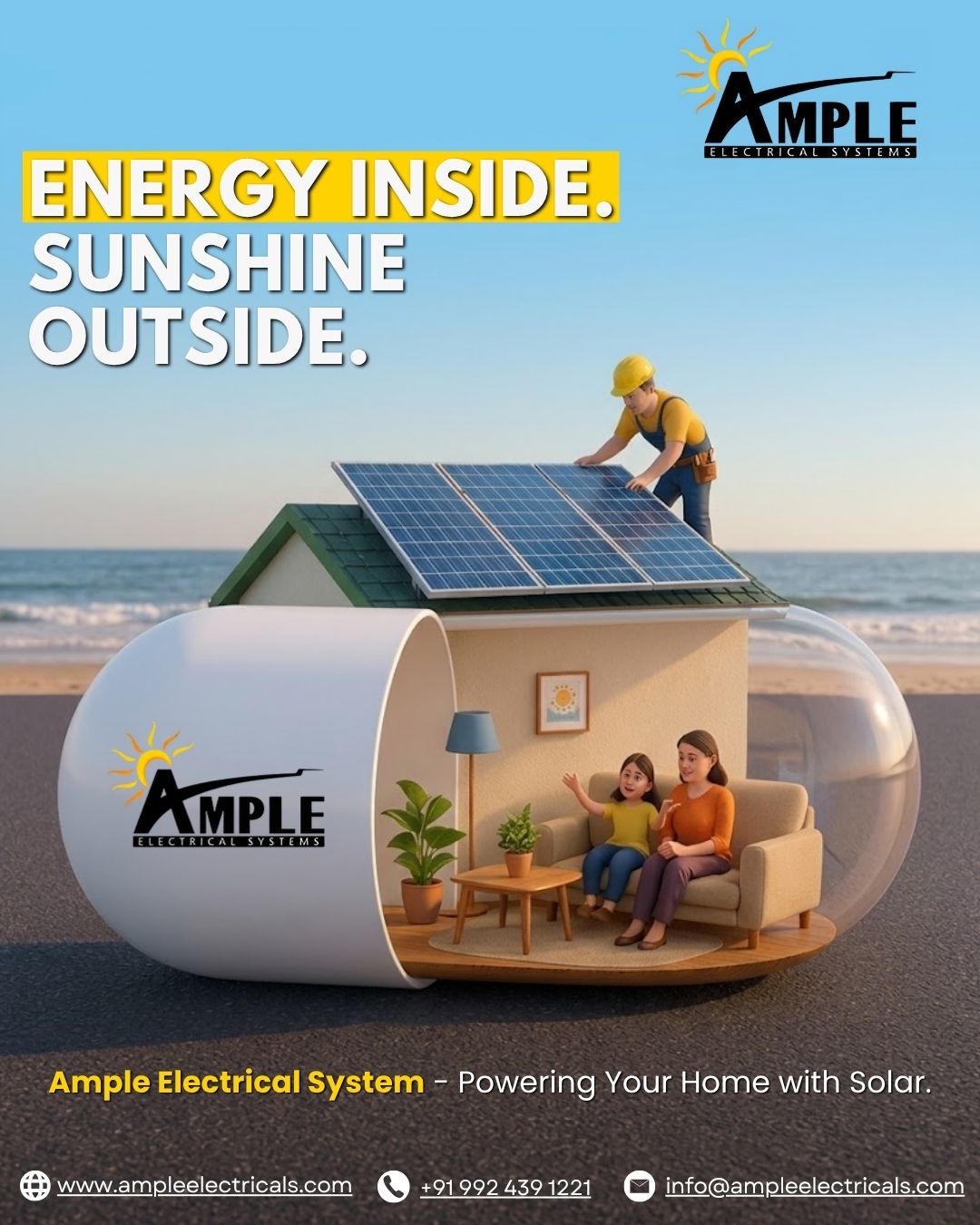
The idea behind "Energy Inside, Sunshine Outside" is simple yet powerful. While the sun shines outside your home, solar panels capture that energy and convert it into electricity that powers your lights, appliances, air conditioners, and other electrical devices inside your home.
As technology advances and energy costs continue to increase, solar power is becoming an essential solution for homeowners seeking energy independence, financial savings, and environmental sustainability.
What Does "Energy Inside, Sunshine Outside" Mean?
The phrase highlights the connection between solar energy generation and household electricity usage.
Sunlight falling on solar panels creates electrical energy that can be used inside the home for:
- Lighting systems
- Fans and air conditioners
- Refrigerators
- Televisions
- Computers and electronics
- Kitchen appliances
- Water heating systems
This means the energy needed inside your home comes directly from the sunshine available outside.
How Solar Energy Powers Your Home
Solar energy generation involves a straightforward process.
Sunlight is Captured
Solar panels absorb sunlight through photovoltaic (PV) cells.
Electricity is Generated
The photovoltaic cells convert solar radiation into Direct Current (DC) electricity.
Inverter Converts Power
An inverter converts DC electricity into Alternating Current (AC), which household appliances use.
Electricity Powers Appliances
The generated electricity is distributed throughout the home to power various devices.
Excess Energy Management
Extra electricity can be stored in batteries or exported to the grid through net metering systems.
Key Features of Residential Solar Systems
| Feature | Benefit |
|---|---|
| Renewable Energy Source | Uses unlimited sunlight |
| Lower Electricity Bills | Reduces monthly expenses |
| Long Lifespan | Operates efficiently for 25+ years |
| Eco-Friendly | Produces clean energy |
| Low Maintenance | Minimal upkeep required |
| Energy Independence | Less reliance on grid electricity |
| Silent Operation | No noise during energy generation |
| Scalable Design | Suitable for different home sizes |
Benefits of Installing Solar Panels at Home
Significant Cost Savings
Solar systems reduce electricity bills by generating free energy from sunlight.
Increased Energy Independence
Homeowners become less dependent on utility providers and rising electricity prices.
Higher Property Value
Properties equipped with solar systems often attract greater market value.
Sustainable Living
Solar energy supports environmentally responsible lifestyles.
Reliable Energy Production
Modern solar systems provide dependable electricity generation for decades.
Low Maintenance Costs
Solar panels require very little maintenance compared to many traditional energy systems.
Solar Power System Components
| Component | Function |
|---|---|
| Solar Panels | Capture sunlight and generate electricity |
| Inverter | Converts DC power to AC power |
| Mounting Structure | Supports panel installation |
| Battery Storage | Stores excess electricity |
| Monitoring System | Tracks performance and efficiency |
| Electrical Wiring | Distributes electricity safely |
Solar Energy Working Process Table
| Step | Process |
|---|---|
| 1 | Sunlight reaches solar panels |
| 2 | Solar cells absorb sunlight |
| 3 | DC electricity is generated |
| 4 | Inverter converts DC to AC |
| 5 | Electricity powers household appliances |
| 6 | Excess energy is stored or sent to the grid |
Why Solar Energy is a Smart Investment
Solar power is not only an environmental choice but also a financial investment.
Advantages include:
- Long-term electricity savings
- Reduced utility bills
- Protection from energy price increases
- Government incentives in many regions
- Increased property value
- Excellent return on investment
Most homeowners recover installation costs through years of reduced electricity expenses.
Environmental Benefits of Solar Power
Solar energy plays an important role in reducing environmental impact.
Reduced Carbon Emissions
Solar systems generate electricity without producing greenhouse gases.
Cleaner Air
Solar power reduces dependence on fossil fuel-based electricity generation.
Conservation of Natural Resources
Renewable energy helps preserve limited natural resources such as coal and natural gas.
Sustainable Energy Future
Widespread solar adoption supports global sustainability goals.
Future of Residential Solar Energy
The future of home energy is increasingly solar-powered. Advancements in solar panel efficiency, battery storage, and smart energy management systems are making solar energy more accessible and effective than ever before.
Future trends include:
- Smart solar homes
- Advanced battery storage systems
- Higher energy efficiency
- Integration with electric vehicles
- Increased adoption of renewable energy
Solar technology will continue to play a major role in creating sustainable and energy-efficient homes.
Frequently Asked Questions (FAQs)
How does solar energy power a home?
Solar panels capture sunlight and convert it into electricity that powers household appliances and systems.
Can solar panels work during cloudy weather?
Yes, solar panels continue generating electricity during cloudy conditions, although output may be lower.
How long do solar panels last?
Most solar panels operate efficiently for 25 to 30 years or more.
Will solar energy reduce my electricity bill?
Yes, solar systems can significantly reduce monthly electricity costs.
Is solar energy environmentally friendly?
Absolutely. Solar power produces clean electricity without harmful emissions.
Do solar systems require maintenance?
Only minimal maintenance, such as occasional cleaning and inspections, is generally required.
Is solar energy a good investment?
Yes. Solar energy offers long-term financial savings and environmental benefits.
Conclusion
Solar energy is transforming modern homes by converting sunshine into usable electricity. The concept of "Energy Inside, Sunshine Outside" perfectly represents how solar technology enables homeowners to harness the power of the sun and use it efficiently within their homes.
By investing in solar power, families can reduce electricity bills, increase energy independence, support environmental sustainability, and enjoy reliable power generation for decades. As renewable energy continues to shape the future, solar energy remains one of the smartest and most sustainable investments for homeowners.