

Table of Contents
- Introduction
- Understanding Solar-Powered Appliances
- Key Features of Solar Energy Systems
- Benefits of Using Solar Energy at Home
- Appliances That Can Run on Solar Power
- How a Solar Power System Works
- Solar System Components
- Technical Specifications
- Installation Process
- Why Homeowners Are Switching to Solar
- Frequently Asked Questions
- Conclusion
Introduction
As electricity prices continue to rise, homeowners are searching for smarter and more sustainable ways to power their daily lives. Solar energy has emerged as one of the most effective solutions for reducing energy costs while supporting environmental sustainability.
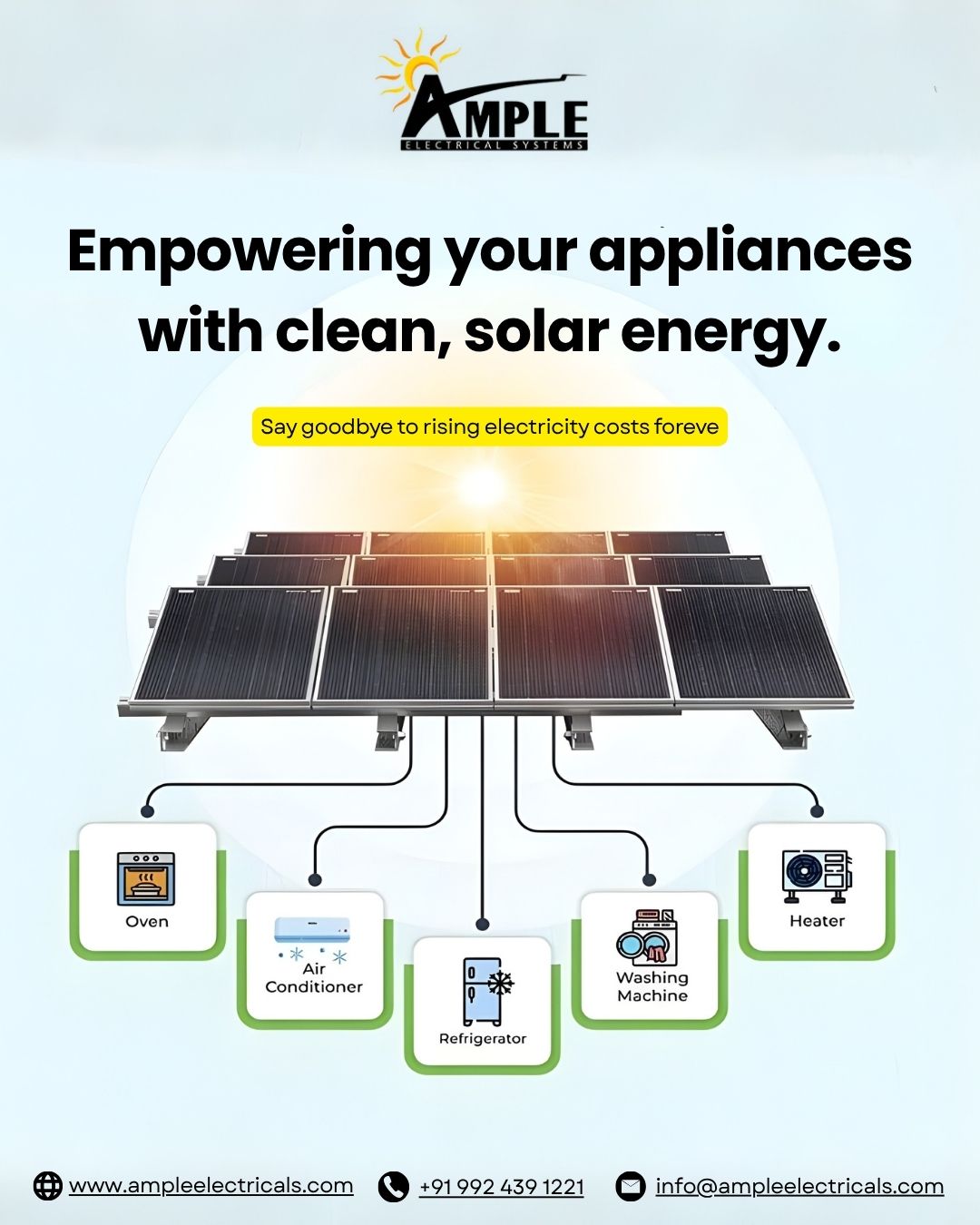
Modern rooftop solar systems can power a wide range of household appliances, including air conditioners, refrigerators, washing machines, water heaters, ovens, lighting systems, and electronic devices. By converting sunlight into usable electricity, solar panels help homeowners enjoy reliable energy while reducing dependence on traditional utility providers.
Investing in solar energy is not only an environmentally responsible decision but also a financially rewarding one that can provide savings for decades.
Understanding Solar-Powered Appliances
Solar-powered homes utilize rooftop solar panels to generate electricity from sunlight. The generated energy can be used immediately to operate household appliances or be supplied to the electrical system of the home.
A properly designed solar system can support the daily operation of multiple appliances while significantly reducing monthly electricity expenses.
Key Features of Solar Energy Systems
| Feature | Description |
|---|---|
| Clean Energy Generation | Produces electricity without pollution |
| Cost Savings | Helps reduce electricity bills |
| Long Lifespan | Operates efficiently for 25–30 years |
| Low Maintenance | Minimal servicing requirements |
| Energy Independence | Reduces reliance on utility providers |
| Eco-Friendly Solution | Lowers carbon footprint |
| Scalable Installation | Suitable for homes of all sizes |
| Reliable Performance | Consistent energy generation throughout the year |
Benefits of Using Solar Energy at Home
Reduced Electricity Bills
Solar panels generate free electricity from sunlight, lowering monthly energy costs.
Environmentally Friendly
Solar energy is renewable and produces no harmful emissions during operation.
Long-Term Savings
The financial benefits continue for decades after installation.
Increased Property Value
Homes with solar installations often have higher market value and appeal.
Energy Security
Generating electricity at home provides greater control over energy consumption and costs.
Appliances That Can Run on Solar Power
A residential solar system can support various household appliances, including:
| Appliance | Solar Compatibility |
|---|---|
| Air Conditioner | Yes |
| Refrigerator | Yes |
| Washing Machine | Yes |
| Water Heater | Yes |
| Electric Oven | Yes |
| Fans & Lights | Yes |
| Television | Yes |
| Computers & Electronics | Yes |
| Water Pumps | Yes |
| Kitchen Appliances | Yes |
How a Solar Power System Works
Sunlight Collection
Solar panels capture sunlight throughout the day.
Electricity Generation
Photovoltaic cells convert sunlight into direct current (DC) electricity.
Power Conversion
The inverter converts DC electricity into alternating current (AC), which household appliances use.
Appliance Operation
Generated electricity powers appliances such as refrigerators, air conditioners, washing machines, and heaters.
Excess Energy Management
Additional energy may be stored in batteries or exported to the electrical grid, depending on the system configuration.
Solar System Components
| Component | Function |
|---|---|
| Solar Panels | Capture sunlight and generate electricity |
| Solar Inverter | Converts DC power into AC power |
| Mounting Structure | Supports rooftop installation |
| Electrical Wiring | Transfers generated power |
| Monitoring System | Tracks energy production |
| Battery Storage (Optional) | Stores surplus electricity |
Technical Specifications
| Specification | Details |
|---|---|
| Energy Source | Solar Radiation |
| Installation Type | Rooftop Solar System |
| Lifespan | 25–30+ Years |
| Maintenance | Low |
| Operating Cost | Minimal |
| Carbon Emissions | Zero During Operation |
| Application | Residential & Commercial |
| Energy Savings Potential | Significant Long-Term Savings |
Installation Process
Site Assessment
Experts analyze roof structure, sunlight exposure, and electricity consumption patterns.
System Design
A customized solar solution is designed according to energy requirements.
Professional Installation
Panels, inverters, and electrical connections are installed safely.
Testing and Commissioning
The complete system is tested for efficiency and safety before activation.
Energy Production
Once operational, the system begins generating electricity to power household appliances.
Why Homeowners Are Switching to Solar
Solar energy offers a practical solution to rising electricity costs while promoting environmental sustainability. Homeowners are increasingly choosing solar systems because they provide long-term financial savings, reliable energy production, and reduced dependence on conventional power sources.
With advancements in solar technology, modern systems are more efficient, durable, and affordable than ever before, making them an ideal investment for today's households.
Frequently Asked Questions (FAQ)
Can solar panels run all household appliances?
Yes, a properly sized solar system can power most common household appliances, including refrigerators, air conditioners, washing machines, lights, and electronic devices.
How much can I save with solar energy?
Savings depend on system size and energy consumption, but homeowners can significantly reduce electricity bills.
Do solar panels work during cloudy weather?
Yes. Solar panels continue generating electricity during cloudy conditions, although output may be lower than on sunny days.
How long does a solar system last?
Most solar panels have a lifespan of 25 to 30 years or more.
Is maintenance required?
Solar systems require minimal maintenance, usually involving periodic cleaning and inspections.
Can solar energy increase property value?
Yes. Solar-equipped homes are often more attractive to potential buyers.
Is solar energy environmentally friendly?
Absolutely. Solar power generates clean, renewable electricity without harmful emissions.
Conclusion
Solar energy is transforming the way homeowners power their daily lives. From running refrigerators and air conditioners to washing machines and water heaters, a well-designed solar system can efficiently support essential household appliances while reducing electricity costs. With long-term savings, low maintenance requirements, and environmental benefits, solar energy is one of the smartest investments for modern homes. By embracing clean solar power today, homeowners can enjoy reliable energy, financial savings, and a more sustainable future for decades to come.